We utilize essential cookies to ensure our website operates effectively and remains secure. Additionally, we'd like to request your permission to use optional cookies. These are intended to enhance your browsing experience by offering personalized content, displaying advertisements that are relevant to you, and helping us to further refine our website.
Choose "Accept all cookies" to agree to the use of both essential and optional cookies. Alternatively, select "Let me see" to customize your preferences.
Privacy Preference Centre
Our website utilizes cookies to enhance your browsing experience and to present you with content tailored to your preferences on this device and browser. Below, you will find detailed information about the function of cookies, enabling you to make informed choices about which cookies you wish to accept. Please note that disabling certain cookies might impact your user experience on our site. It's important to remember that cookie preferences need to be set individually for each device and browser you use. Clearing your browser's cache may also remove your cookie settings. You have the freedom to modify your cookie preferences at any point in the future.
For a comprehensive understanding of our use of cookies, please refer to our complete cookies policy.
These cookies are needed for the website to work and for us to fulfil our contractual obligations. This means they can't be switched off. They enable essential functionality such as security, accessibility and live chat support. They also help us to detect and prevent fraud. You can set your browser to block or alert you about these cookies, but it means some parts of the site won't work.
Performance and Analytics
These cookies allow us to measure and improve the performance of our site. They help us to know how popular pages are, and to see how visitors move around the site. If you don't allow these cookies, we won't know when you've visited our site, and we won't be able to monitor its performance.
Functional
These cookies enable us to provide enhanced functionality and personalisation. They may be set by us or by third party providers whose services we've added to our pages. If you don't allow these cookies, some or all of these services may not work properly.
Advertising
These cookies collect information about your browsing habits to show you personalised adverts. They may be used to build a profile of your interests and show you relevant adverts on other sites. They don't store directly personal information, but are based on uniquely identifying your browser and internet device. If you don't allow these cookies, the adverts you see will be less relevant.
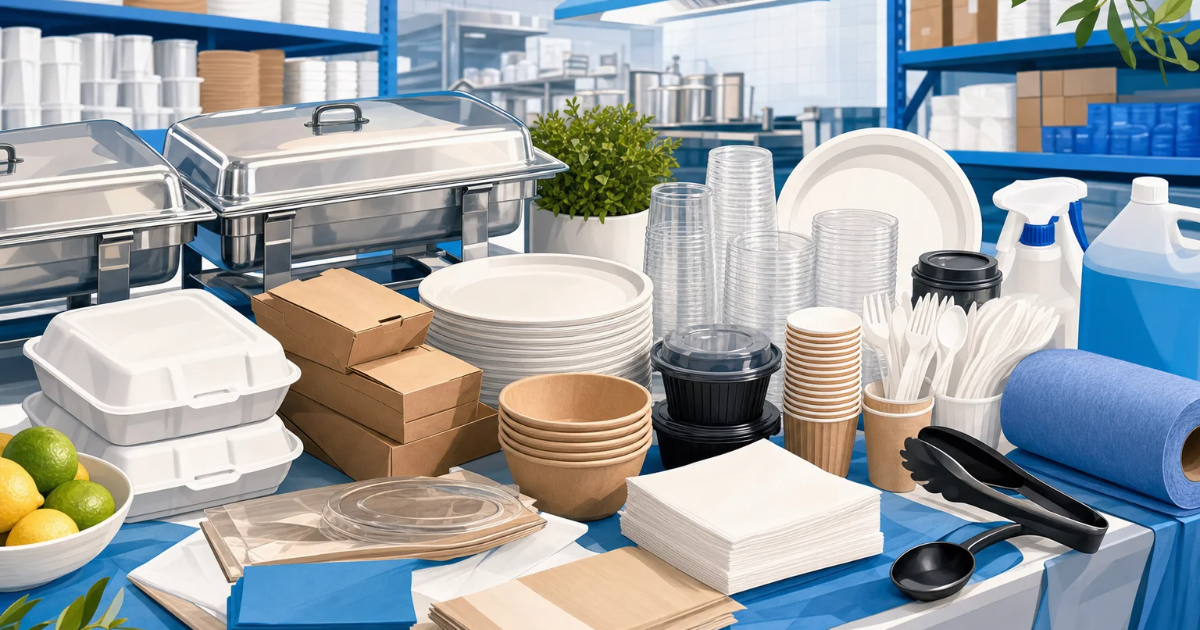
A catering supplies checklist is a task-based list of food packaging, tableware, drinks, cleaning, transport and backup items. It helps teams run a catered service without missed essentials. For Leeds events, a catering supplies checklist also helps teams plan local collection, basket ordering and trade quantities before staff leave for the venue.
Event supply planning matters because one missing item can slow the whole service. A buffet with 120 guests can run into problems if serving spoons, lids or waste bags are missing, even when the food is ready. Therefore, buyers need a list that follows the work, not just the product aisle.
This article shows how to build a practical order for serving, takeaway, drinks, sanitation, transport and backup stock. Additionally, it gives quantity rules for 50, 100 and 200 guests, plus local notes for Leeds caterers, bakeries, cafés and event teams.
What should every catering supplies checklist include?
A strong catering supplies checklist should include serving ware, food containers, drink supplies, table setup, cleaning products, transport items and spare stock. Each group supports a different point in the job, from prep to service to pack-down. Additionally, a 10% spare allowance can help cover common breakage, extra guests and menu changes.
Food service teams often remember plates and cutlery first. However, they can miss lids, portion pots, foil, tongs, trays and refuse sacks. For example, a Leeds office lunch for 80 people needs serving platters, sauce pots and takeaway bags if staff plan to clear leftovers safely.
Rule of thumb: plan 1.2 plates, 1.1 cutlery sets, 1 napkin and 1 cup per expected guest, then add a suitable backup pack for front-of-house pressure.
Catering checklist supplies for 50, 100 and 200 guests
Quantity planning works best when teams count meal touches, not only guest numbers. A guest at a buffet may use 2 plates if dessert sits on a separate station. Meanwhile, a hot takeaway service may need 1 container, 1 lid, 1 napkin, 1 fork and 1 bag per meal.
For 50 guests, plan 60 plates, 55 cutlery sets, 60 napkins and 60 cups.
At 100 guests, plan 120 plates, 110 cutlery sets, 120 napkins and 120 cups.
At 200 guests, plan 240 plates, 220 cutlery sets, 240 napkins and 240 cups.
For sauce, chutney or dips, allow 1 portion pot per guest plus 10 spare pots.
For staff service, add 2 serving utensils per dish and 1 spare set per station.
Example: a 100-guest buffet with mains, sides and dessert needs 120 dinner plates, 120 dessert plates, 110 cutlery sets, 120 cups, 120 napkins, 8 serving utensils for 4 dishes and 20 spare portion pots. Therefore, the working total is 618 disposable and service pieces before trays and bags.
Event Task Checklist for Catering Supplies
Event supply checklist for Leeds catering jobs by task and category
Event task or category
Essential supplies
Leeds event planning notes
Buffet food service
Plates, bowls, platters, tongs
Add spares for second servings
Hot takeaway packing
Foil trays, lids, bags, labels
Check heat and leak needs
Cold food display
Clear lids, deli pots, trays
Keep allergen labels visible
Drinks station
Cups, stirrers, sleeves, sugar
Separate hot and cold cups
Coffee service
Lids, napkins, milk pots, bins
Place waste near urns
Table setup
Covers, napkins, cutlery, skirting
Measure table length first
Transport and storage
Prep tubs, carriers, refuse sacks
Pack by service order
Cleaning and waste
Sanitiser, cloths, gloves, bags
Split food and general waste
Backup stock
Extra lids, cups, forks, foil
Hold 10% in a marked box
The catering supplies checklist table works like a static checklist. Buyers can copy each row into an order plan and tick items by task. As a result, the final basket reflects the service flow, not just a loose product list.
Leeds venues can vary from small halls to large hotel rooms and outdoor sites. Therefore, table size, waste access, loading distance and coffee station location change the order. A Headingley community party may need more takeaway bags. Meanwhile, a city centre corporate lunch may need more portion control and neat presentation.
Downloadable catering supply checklist
For a downloadable catering supply checklist, copy the table above into a spreadsheet, notes app or purchasing document. Then add columns for quantity, size, material, supplier code and checked status. Save one master version for standard Leeds events. Next, duplicate it for each job so staff can mark items off before collection, delivery, venue setup and pack-down.
A useful downloadable catering supplies checklist should include separate tick boxes for serving, buffet display, takeaway packing, drinks service, cleaning, transport and backup stock. Add the event name, date, guest count, venue address, collection time and staff member responsible for the order at the top of the document.
Food serving, buffet display and takeaway packing items
Food serving requires plates, bowls, disposable trays, pans, lids, serving utensils, platters and display stands. Hot service also needs chafing dishes or compatible buffet warming supplies, plus chafing fuel where the venue allows it. Takeaway packing needs containers that match the food type and journey length.
Hot curries, rice dishes, pasta bakes and roasted items often need foil trays with firm lids. For this use, many trade buyers add foil containers for hot food to the same basket as bags, napkins and cutlery. Cold desserts, salads and dips need bowls, clear lids, deli containers and portion pots.
Watch out: lids fail more often than bases when teams mix container ranges. Order matching lids with every tray or bowl size.
How should a checklist for catering supplies change for weddings, parties and corporate catering?
Catering supply needs change by event type because guests eat, move and dispose of items in different ways. Weddings need table presentation and backup service stock. Parties need easy cleanup and extra drinks items. Corporate catering needs portion control, neat packaging and fast service over short breaks.
A wedding buffet for 150 people may need table covers, napkins, skirting, serving platters and dessert plates. In contrast, a children’s party may need stronger waste bags, spill cloths and extra cups. A corporate lunch near Leeds city centre may need labelled packs, lids and stackable bags for office delivery.
Wedding and banquet setup
Wedding and banquet orders should start with the table plan. Count guest tables, buffet tables, cake tables, drinks stations and back-of-house prep tables. Then add covers, tabletop accessories, napkins, cutlery, plates and serving trays for each point.
For presentation, buyers should include table covers for service areas, plus skirting or linen where the event style requires it. A banquet with 12 guest tables and 3 service tables needs at least 15 table cover points before any spare stock. Add 2 extra covers for last-minute layout changes.
Parties, festivals and informal events
Party catering supplies should favour speed, simple handling and easy cleanup. Bowls, trays, plates, cutlery, napkins, cups and refuse bags carry most of the work. Additionally, outdoor events need covered storage, extra lids and heavier bags because wind and rain can disrupt open stations.
For a local party, buyers often search for party catering supplies near me because a short lead time matters. However, a nearby shop only solves the problem if the list covers drinks, food, waste and spare stock. One missing cup sleeve can slow a coffee table for 40 guests.
Corporate catering and office lunches
Corporate catering needs fast setup and clean removal. Lunch boxes, foil trays, lids, portion pots, bags, napkins and disposable cutlery reduce handling time. Labels also help staff separate vegetarian, vegan, halal, gluten-free and allergen-aware meals.
For a 60-person training day, pack food by department or room if the venue has more than 1 serving point. That small packing choice cuts queue pressure because staff can place 2 or 3 stations at once. It also reduces the risk of opening every box during setup.
Which buffet items belong on your checklist for catering supplies?
Easy-to-miss event supplies often sit between categories: ladles, tongs, drink stirrers, cup lids, sleeves, labels, foil, chafing fuel and insulated carriers. These items do not always appear on a menu plan. However, they decide whether staff can serve hot food, pour drinks and move stock safely.
Temperature control needs planning before food leaves the kitchen. Hot food may need chafing dishes, fuel, foil pans, lids and insulated food carriers. Similarly, cold items may need lidded trays, prep tubs and cool storage during transport.
The best event order follows the service route from kitchen to table, then from table to waste area.
Buffet warming and display
Buffet warming supplies include chafing dishes, water pans, fuel, foil trays, serving spoons, tongs and heat-safe lids. Staff should count 1 utensil per dish, plus 1 spare utensil per station. For sauces and gravies, use ladles rather than flat spoons.
Display also affects supply choice. Platters and display stands suit bakery items, sandwiches and cold canapés. Meanwhile, deep trays work better for sauced dishes because shallow platters increase spill risk during busy service.
Drinks, coffee stations and beverage service supplies
Drinks service needs cups, lids, stirrers, sleeves, napkins, straws where used, sugar, milk portion pots, beverage dispensers and waste bins. Hot drinks and cold drinks need different cup types, so do not treat all cups as one stock line. For planning, allow at least 1 cup per guest per drink round.
Coffee stations need more small items than many teams expect. A 100-guest morning meeting can use 100 cups, 100 stirrers, 100 napkins, 2 waste bags and extra milk pots before lunch starts. Buyers can add suitable cups for hot and cold drinks when building the drinks part of the basket.
Tip: place a small waste point within 1 metre of each drinks station. Guests discard lids, stirrers and sachets before they move away.
What cleaning items belong on a checklist for catering supplies?
Cleaning, sanitation and waste supplies should be ordered with food packaging because staff need them during prep, service and pack-down. A sound order includes food-safe cleaning chemicals, sanitiser, gloves, blue roll, cloths, refuse sacks, recycling bags and spill control items. The cleaning list should sit beside the food list, not after it.
Foodservice teams in Leeds often place last-minute orders after spotting low stock on event morning. However, cleaning items can be harder to borrow than plates because the venue may not hold food-grade products. Keep them in the same basket as containers and tableware.
Sanitation items for foodservice teams
Sanitation products should cover hands, surfaces and spills. Add disposable gloves, hand towels, sanitising spray, washing-up liquid, degreaser, cloths and blue roll. For commercial food prep, select cleaning products that suit kitchen surfaces, service tables and equipment contact points.
Buyers can include cleaning chemicals for catering areas with the same trade order as packaging. This keeps prep stock, service stock and pack-down stock in one place. It also helps a manager check the basket before approval.
Waste, recycling and pack-down stock
Waste planning often needs 3 streams on many jobs: food waste, dry mixed recycling and general waste. Even when the venue handles disposal, the catering team still needs sacks, liners and gloves. Add tape or labels if staff must mark bags by zone.
For 100 guests, plan at least 3 active waste points if drinks, buffet and dessert run in separate areas. Each point should have spare liners below the bin or behind the table. Staff lose time when fresh bags sit back in the van.
How can event planners use Thali Outlet categories in a checklist for catering supplies?
Event planners can use supplier categories as a task-based order path: packaging first, then tableware, drinks, cleaning, transport and backup. A catering supplies ecommerce catalogue can be used to search, browse categories, add products to a basket and log in to order. Local access, where available, helps teams check practical supplies close to the job.
A buyer looking for catering supplies nearby should start with the menu and guest count. Then the buyer should match each dish to a container, each guest to a place setting and each station to a waste point. This method can cut missed items better than shopping by memory.
Shop-by-category order path
Start with bags, bakery packaging, bowls, containers, cups, cutlery, janitorial items, napkins, plates, platters, table covers and warehouse supplies. These category names match how many catering teams build a working basket. They also help buyers split the order between front-of-house, kitchen and transport needs.
Compostable and practical catering supplies can sit beside standard disposable items in the same plan. Bagasse plates, compostable cutlery and paper-based options suit events with sustainability goals. However, reusable crockery can be better for a formal seated meal where washing, transport and breakage control are already planned.
Side-by-side disposable versus reusable cost comparison
Disposable versus reusable catering supplies cost comparison
Cost factor
Disposable supplies
Reusable supplies
Upfront purchase
Usually bought per event or in trade packs, with cost linked to guest count and spare allowance
Usually higher at the start because plates, bowls, cutlery, cups and transport crates must be bought or hired
Cleaning and labour
Lower washing requirement after service, but staff still need waste handling and recycling time
Requires washing, drying, counting and repacking, plus staff time or washing facilities
Transport and storage
Lighter to transport and simple to pack by station, but needs space for unused packs and waste bags
Needs crates, return transport and safe storage before and after the event
Breakage and loss
Breakage is less disruptive, but crushed packs or missing lids can still affect service
Breakage, chips and missing items can add replacement or hire charges
Best fit
Takeaway service, outdoor events, office lunches, high-turnover buffets and events without wash-up access
Formal seated meals, venues with wash-up facilities and repeat events where stock can be controlled
To compare costs fairly, count the full job rather than only the item price. Disposable supplies should include plates, cutlery, cups, napkins, waste bags and spare stock. Reusable supplies should include purchase or hire, washing, staff time, breakage, transport and storage. Ultimately, the better choice depends on the venue, service style, staff available and how many times the items will be used.
Local pickup, delivery and availability in Leeds
Local planning should include collection time, delivery options, stock availability and store hours before the event date. Leeds buyers may need packaging, tableware, cleaning products and event catering supplies at short notice. Add these notes to the catering supplies checklist before staff set the final run.
A same-day supply issue needs a short, calm process. The best first move is to list the missing item, quantity, size and substitute option before contacting the supplier. For example, if 9-inch plates run short, an 8-inch plate may work for cake but not for a sauced main.
What should you do if catering supplies from the checklist are missing on event day?
Missing catering supplies on event day require a fast count, a clear substitute plan and one person in charge of the order. Do not send 3 staff members to buy the same items. A catering supplies checklist protects time and avoids duplicate spend.
Count the missing items by exact size, material and quantity before anyone leaves the venue.
Mark each missing item as critical, useful or optional for the next 2 hours of service.
Choose one acceptable substitute for every critical item, such as bowls instead of plates for rice dishes.
Check the online catalogue and basket before calling or travelling for local stock.
Send one staff member with the confirmed list, venue address and return time.
Hold 10% of the replacement stock back as backup instead of placing all items on tables.
Good to know: backup stock works best in a marked box. Keep spare lids, forks, cups, napkins and tape together so staff can find them quickly.
Conclusion: check catering supplies before every Leeds event
A catering supplies checklist turns a busy event order into a controlled buying task. It links guest count, menu style, venue layout, cleaning needs and transport into one practical list. For Leeds caterers and food businesses, this helps reduce missed items when orders include food packaging, drinks service, sanitation and backup stock.
Use the checklist with the wider local buying route in Catering Supplies Near Me in Leeds if you need catering supplies near me for a Leeds job. The strongest order starts with the service task, then matches every dish, drink and table to the right product category.
The most reliable event orders are not the biggest ones. Instead, they are the ones checked by station: kitchen, buffet, drinks, tables, transport and waste. That simple walk-through catches the small items that cause the most service delays, especially lids, tongs, liners and napkins, the team at Thali Outlet.
FAQ
These quick answers help Leeds buyers check the catering supplies checklist before ordering.
What items are needed for food serving, buffet display and takeaway packing?
Food serving needs plates, bowls, cutlery, napkins, serving spoons, tongs, platters and display trays. Buffet display may also need chafing dishes, water pans, chafing fuel and display stands. Takeaway packing needs trays, lids, foil containers, portion pots, labels and carry bags matched to the food type.
What extra supplies are needed for drinks, coffee stations and beverage service?
Drinks service needs cups, lids, stirrers, sleeves, napkins, straws where used, sugar, milk pots and waste bags. Coffee stations also need space for used sachets, stirrers and cup lids. For busy service, plan 1 cup per guest per drink round and add a 10% spare allowance.
Which cleaning and sanitation products should be included in the same order?
A catering order should include sanitising spray, food-safe cleaning chemicals, gloves, cloths, blue roll, hand towels, washing-up liquid, refuse sacks and recycling bags. Spill control items also help during drinks service. Place cleaning products in the same order as packaging so staff can prep, serve and pack down without a second stock run.
How should the checklist change for a party, wedding, banquet or corporate event?
A party checklist should add extra cups, waste bags and spill supplies. A wedding or banquet checklist should add table covers, napkins, skirting, tabletop accessories and presentation trays. A corporate event checklist should focus on portion control, labelled packaging, quick setup and neat takeaway handling for offices and meeting rooms.
Where can Leeds buyers start a checklist for catering supplies?
Start with the guest count, menu and service style, then build the basket by task. For table service or buffet setup, add disposable plates for event catering and match them with bowls, cutlery, napkins, containers, cups and cleaning stock. A catering supplies checklist helps each station get the right supplies before ordering.