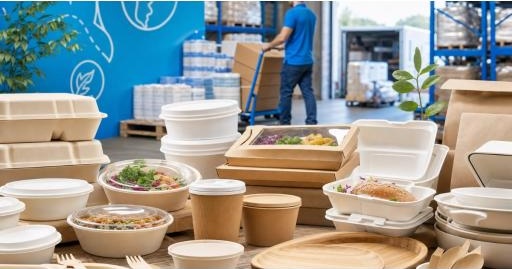
Compostable Food Containers Wholesale: Menu-to-Container Matching Guide
Wholesale compostable food containers are trade-pack food boxes, bowls, trays, cups, and lids. Additionally, they use plant-based or fibre materials that break down under the right composting conditions. For buyers sourcing compostable food containers wholesale, the main task is simple: match the container to the food, the lid, the service style, and the disposal route.
A Leeds takeaway can use 3 different packs in one lunch service: a lidded bowl for rice, a clamshell for a hot meal, and a tray for sides. However, the wrong lid or material can cause leaks, soft bases, poor stacking, and higher waste. Bulk buyers need clear product categories before they place a repeat order.
This article explains container types, materials, lids, accessories, bulk ordering points, composting limits, and food safety checks. Additionally, it covers case packs, pallets, tiered pricing questions, sample requests, and the information a trade buyer should prepare before ordering through Thali Outlet.
What Trade Buyers Need to Know About Wholesale Compostable Food Containers
Compostable food containers wholesale buyers use are disposable food packs bought in trade quantities. They support takeaway, catering, cafes, food trucks, events, and workplace foodservice. The category covers containers made from sugarcane bagasse, bamboo fibre, wheat straw fibre, paperboard, PLA, and CPLA. Each material suits different food temperatures, moisture levels, and service times.

Compostable does not mean the same thing as biodegradable. Biodegradable food containers may break down over time, but compostable food containers need set conditions. Usually, they need heat, moisture, oxygen, and microbial activity. Meanwhile, commercial composting sites can hold material at controlled temperatures for weeks. However, home compost heaps often run cooler and slower.
For a busy operator, the buying decision starts with menu format. A curry house may need 2-compartment clamshells, 12 oz bowls, and matching cutlery. Similarly, a bakery may need kraft boxes, flat bags, and trays. A caterer may need large serving bowls, plates, napkins, and table covers for 50 to 500 covers per event.
Good to know: A compostable pack only works as intended when the food, lid, storage, and waste route all suit the material. A hot wet dish needs a different pack from a cold salad.
Wholesale Compostable Food Container Types and Best Uses
Compostable container categories for trade foodservice buying
|
Container type
|
Best for
|
Suitable materials
|
Lid/accessory match
|
Bulk buying notes
|
|
Clamshell boxes
|
Hot meals, takeout
|
Bagasse, wheat straw
|
Hinged lid, cutlery
|
Check 1, 2, 3 compartments
|
|
Food bowls
|
Rice, soup, salads
|
Paper, bagasse, PLA lining
|
Flat or vented lids
|
Match oz size to portion
|
|
Food trays
|
Street food, events
|
Kraft paper, bagasse
|
Open tray, paper wrap
|
Buy by menu station
|
|
Kraft boxes
|
Noodles, pasta, bakery
|
Paperboard, PLA lining
|
Tuck top or separate lid
|
Check grease resistance
|
|
Salad bowls
|
Cold food, deli counters
|
Kraft, PLA, paper
|
Clear lid, flat lid
|
Stack test before bulk order
|
|
Cups
|
Sauces, cold drinks, samples
|
Paper, PLA, CPLA
|
Dome, flat, portion lids
|
Confirm lid code per size
|
|
Serving bowls
|
Buffets, catering, sharing
|
Bagasse, paper
|
Film, dome lid, tongs
|
Plan per guest count
|
|
Plates
|
Events, buffets, staff meals
|
Bagasse, paper
|
Cutlery, napkins
|
Order 10 percent spare
|
Wholesale compostable food containers for daily service
Trade buyers can source clamshells, bowls, trays, boxes, cups, lids, plates, and cutlery as compostable food packaging wholesale lines. The best choice depends on portion size, hold time, transport method, and food type. Food may be wet, oily, chilled, or hot. For example, a 500 ml salad bowl and a 500 ml hot soup bowl may look similar. However, the lid and lining needs can differ.
Bagasse clamshells suit many takeaway meals because the fibre handles heat and light moisture well. Additionally, foodservice buyers who need practical hot food packaging can review compostable bagasse containers and boxes. Moreover, for rice, noodles, and portioned dishes, bowls often give a cleaner pack-out than flat boxes.
Kraft food trays help event teams serve loaded fries, wraps, burgers, and street food without a full lid. Meanwhile, kraft boxes and containers work well for grab-and-go food, bakery items, and casual takeaway menus. Buyers should confirm whether the product needs lining for oily or sauced food.
Wholesale planning for compostable food containers at events
A simple event calculation helps. For a 120-guest buffet with one main plate, one side bowl, one dessert bowl, and 10 percent spare stock, order 132 plates, 132 side bowls, and 132 dessert bowls. As a result, the total comes to 396 food containers before adding cutlery, napkins, and service items.
For repeat events, compostable food containers wholesale orders should follow the same pack list each time. Therefore, staff can check stock faster and reduce last-minute substitutions.
How Do Bagasse, Bamboo, Paper, PLA and CPLA Compare for Hot and Cold Food?
Bagasse, bamboo, wheat straw, paper, PLA, and CPLA each solve different foodservice problems. Fibre materials usually suit hot and dry-to-moist meals better. Clear PLA suits cold display food. Additionally, CPLA handles more heat than standard PLA, so it often appears in cutlery and hot cup lids.

Hot meals, grease and wet wholesale compostable food containers
Sugarcane bagasse is made from leftover cane fibre after juice extraction. The material gives a firm feel, pale colour, and good heat tolerance for many hot takeaway dishes. In practice, bagasse often suits curries, rice, noodles, fried items, burgers, and plated meals with short delivery times.
Bamboo and wheat straw fibre serve a similar role in many eco friendly food containers. These fibres can feel strong and dry, which helps with stacked service at events. However, any fibre container can soften if it holds very wet food for a long time. Therefore, buyers should test soup, gravy, and sauce before ordering by the pallet.
Cold food, salads and wholesale compostable food containers with clear lids
PLA is a plant-based plastic used for clear cold cups, salad lids, and deli containers. Standard PLA can deform with heat. Therefore, buyers should keep it for chilled food, cold desserts, salad bars, and display packs. Clear lids help counter staff check contents fast during a lunch rush.
Paper and kraft bowls sit between fibre and clear PLA. They suit salads, pasta, grain bowls, and some warm foods when the lining matches the menu. Additionally, buyers can review kraft salad bowls and lidded containers for cold food counters and takeaway salad service.
The best compostable pack is not the greenest-looking one. It is the one that holds the food safely until the customer finishes it.
CPLA is crystallised PLA. The material handles more heat than standard PLA. Therefore, it is useful for hot drink lids and compostable cutlery. However, buyers ordering compostable food containers and cutlery should avoid mixing PLA lids with hot food bowls unless the product data supports that use.
What Should Buyers Check for Lids, Inserts, Cutlery and Accessories?
Buyers should check lids, inserts, cutlery, napkins, and plates as part of the same wholesale order. A container is only useful when the lid fits, stacks, seals, and supports the food in transport. Moreover, a mismatch between a 12 oz bowl and a similar-looking lid can create leaks across a whole delivery run.
Start with size codes, not appearance. Many bowls use the same diameter across 8 oz, 12 oz, and 16 oz sizes. Conversely, other ranges use separate lid sizes. A catering team should test a full stack of 20 filled containers before a large event. Lid grip and stack height affect speed at the pass.
Cutlery also needs a material decision. CPLA cutlery can suit hot meals, while wooden cutlery gives a simple low-plastic option for festivals and buffets. Additionally, buyers can add compostable cutlery to container orders.
-
Match each lid to the exact bowl, tray, or cup size.
-
Use vented lids for steamy food where condensation can soften food.
-
Check insert depth for sauces, dips, and multi-part meals.
-
Order plates and napkins with event containers to reduce split purchasing.
-
Keep sample lids on site so staff can check replacements quickly.
Common mistake: Do not order containers first and lids later from memory. A 1 mm rim difference can stop a lid from closing correctly.
How Do Bulk Ordering, Case Packs, Pallets and Tiered Pricing Work?
Bulk ordering for compostable takeaway packaging wholesale usually works by case quantity, mixed cases, pallet volume, or trade account pricing. Case packs help buyers control stock. Pallets suit high-use items such as bowls, clamshells, cups, and lids. Tiered pricing can depend on product type, order size, and account terms.
Case packs vary by item. Small portion pots may come in higher counts than large clamshells because they use less space. For example, a buyer planning 300 lunch covers per day may use 1,500 containers in a 5-day week before spares, staff meals, or event add-ons.
Moreover, pallet orders need more planning. Buyers should check storage space, goods-in access, and stock rotation before asking for a pallet quote. A single pallet can reduce repeat ordering. However, it can also tie up space if the menu changes or seasonal demand drops.
Rule of thumb: calculate weekly container use from cover count, then add 10 percent spare stock for damaged packs, menu changes, and last-minute orders.
Transparent landed cost means more than the case price. A trade buyer should allow for product cost, delivery or collection terms, VAT treatment, storage space, and waste from mismatched lids. For imported or custom printed packaging, landed cost may also include artwork, plates, shipping, duty, and longer lead times.
Simple landed-cost worksheet for wholesale compostable food containers
Use this worksheet before comparing wholesale quotes. Add the relevant cost lines for the order. Then divide the total landed cost by the number of usable containers in the order.
Landed-cost calculator for compostable food container wholesale orders
|
Cost line
|
Cost detail
|
Example calculation
|
|
Case price
|
Price per case multiplied by number of cases
|
£ per case x cases ordered
|
|
Delivery or freight
|
Courier, pallet delivery, or collection cost
|
Delivery charge divided across the order
|
|
VAT
|
VAT applied to the order where relevant
|
Subtotal x VAT rate
|
|
Storage cost
|
Space, racking, or handling cost for bulk stock
|
Monthly storage allowance for pallet or cases
|
|
Duty
|
Any duty or import charge for imported supply
|
Duty line from supplier or freight quote
|
|
Custom print costs
|
Artwork, plates, origination, samples, or print setup
|
Setup cost divided by total units
|
|
Total landed cost
|
Add all cost lines together
|
Product + delivery + VAT + storage + duty + print costs
|
|
Total per container
|
Total landed cost divided by usable containers
|
Total landed cost ÷ number of containers
|
When lids are bought separately, calculate the total per served meal, not just the container price. For example, a bowl, lid, cutlery pack, napkin, and delivery charge all contribute to the real cost of one takeaway order.
For regular buyers, compostable food containers wholesale planning should include reorder points and storage checks. As a result, the next order is based on use, not guesswork.
What Should Buyers Know About Composting Rules, Certifications and Food Safety?
Trade buyers should treat composting claims, food-contact safety, and PFAS disclosures as purchase checks, not marketing extras. Compostable packaging needs the right waste route, and food safety matters before disposal. A container must suit direct food contact, the intended temperature, and the expected hold time.
Commercial composting for wholesale compostable food containers
Commercial composting uses controlled heat, moisture, oxygen, and processing time. Many compostable packaging items need commercial conditions rather than a home compost bin. However, local acceptance can vary by council area, waste contractor, site capability, and contamination rules.
For Leeds businesses, the practical step is to ask the waste contractor what it accepts from foodservice sites. Some facilities accept food waste but reject packaging. Meanwhile, others accept certified compostable liners or selected packs. Buyers should also train staff and customers. For example, one black plastic fork can contribute to contamination in a compostable bin.
Regional composting acceptance lookup checklist
Use this lookup-style checklist before placing bin labels on site or telling customers where to dispose of compostable packaging. Keep a copy with the date checked. Acceptance can change when waste contracts or processing sites change.
Additionally, ask whether the site accepts bowls, clamshells, cups, lids, and cutlery as separate items. This check helps buyers avoid claims that staff cannot follow at service time.
Food-safe documents and certification checks
Additionally, food-contact documentation or certification helps confirm that a pack suits food under stated conditions. Compostability standards confirm that a material can break down under defined test conditions. These two checks are different. Therefore, buyers should ask for both where the order size or risk level justifies it.
No-added-PFAS information has become a common buyer question for fibre packaging. PFAS are chemicals linked with grease and water resistance in some food-contact materials. Consequently, a trade buyer can request product declarations, test documents, or supplier statements for fibre bowls, plates, and clamshells before placing a high-volume order.
Moreover, custom branding, OEM-style supply, and printed packaging need extra checks. Artwork, ink type, food-contact surfaces, minimum order quantity, and sample approval can affect lead time. For a new printed bowl, a buyer should approve a physical sample before committing to a large run.
How Can Leeds Takeaways, Cafes, Caterers and Event Organisers Order Efficiently?
Leeds trade buyers can order more efficiently by treating packaging as part of menu planning, not a last-minute stock item. The fastest orders use clear product categories, known sizes, lid matches, and realistic weekly usage. Additionally, product categories, basket functions, account logins, and wholesale cash and carry access can all help when they are available.

-
List every menu item that needs a disposable container.
-
Group items by hot, cold, wet, dry, and delivery use.
-
Match each container to its exact lid and accessory.
-
Estimate weekly use from covers, events, and takeaway volume.
-
Add 10 percent spare stock for damage and late changes.
-
Place the order through the site basket or contact the team for trade support.
Restaurants, cafes, caterers, food trucks, event organisers, and distributors often need different pack mixes. A cafe may buy compostable to go food containers for salads and cakes. Similarly, a caterer may need serving bowls, plates, and cutlery for 200 guests. A food truck may focus on trays, wraps, and portion pots.
Real-style customer scenarios for restaurants and caterers
An independent Leeds restaurant reviewed its curry, rice, and side portions before ordering for lunch takeaway. The team selected bagasse clamshells for hot main meals, lidded bowls for rice dishes, and compostable cutlery for orders leaving the premises. The first trade order used several cases of each fast-moving line rather than a pallet. This let staff test lid fit, stacking, and portion control before setting a repeat order.
A local event caterer preparing a buffet-style service for a corporate booking chose bagasse serving bowls, plates, napkins, and cutlery from one stock plan. The order quantities were based on guest count plus spare stock for late additions and service damage. As a result, the event team had a simpler pack list, fewer missing accessories on the day, and easier reordering for the next similar job.
For serving food at events, bagasse catering serving bowls can sit alongside plates, napkins, and cutlery in one stock plan. That approach reduces ordering gaps and helps staff pack the right items for each job.
Practical Recommendations for Menu-to-Container Matching
A good menu-to-container match starts with heat, liquid, grease, portion size, and carry distance. Use fibre packs for many hot meals, lined paper bowls for salads and grains, clear PLA for cold display, and CPLA accessories where heat matters. However, always test the packed meal, not just the empty container.
Match wholesale compostable food containers by menu item
Hot curry with rice often suits a bagasse clamshell or bowl with a firm lid. Soup needs a bowl designed for liquid, a tight lid, and enough headspace to reduce spills. A dressed salad benefits from a kraft or clear bowl that shows the contents and keeps leaves from crushing.
Street food at events often works better in trays than closed boxes because customers eat while standing. For this use, kraft food trays can suit loaded chips, nachos, burgers, and tasting portions. Additionally, order trays by service station, not just guest count, because queues can build when stock sits in the wrong place.
Build a simple wholesale specification
A wholesale specification should record container type, size, material, lid code, accessory, food use, storage area, and reorder point. Even a 7-column stock sheet can stop wrong picks and split orders. Moreover, distributors and multi-site operators should add delivery address, case count, and approval contact.
Ask for or download wholesale spec sheets before confirming repeat orders, especially when several container and lid ranges look similar. A useful spec sheet should show SKU, size, material, lid code, case pack, pallet quantity, and available certification documents. Therefore, purchasing, kitchen, and goods-in teams all work from the same product details.
Sample requests help when a menu is new or the order is large. Ask for the exact size and lid match you plan to buy. Then test heat, grease, stacking, and customer handling. If the container passes a full service trial, the risk of a bulk mistake drops.
The best packaging order starts with the menu and ends with the waste bin. We would rather test 3 container options with the real food than guess from a catalogue image. Similarly, small checks at the start save time during a busy service. The team at Thali Outlet recommends this approach for compostable food containers wholesale orders.
FAQ
These common questions cover the checks trade buyers raise before choosing compostable packaging for service.
What compostable food container types are available wholesale?
Wholesale options include clamshells, bowls, trays, kraft boxes, salad bowls, cups, portion pots, plates, lids, and cutlery. Trade buyers can also add napkins, table covers, and serving items for catering jobs. The right mix depends on menu type, portion size, service speed, and whether the food travels.
Which materials suit hot meals, cold food, soups, salads, catering and takeaway?
Bagasse, bamboo, and wheat straw often suit hot meals and takeaway dishes. Kraft paper and lined paper bowls work well for salads, grains, bakery food, and some warm meals. PLA suits cold food and clear display use, while CPLA suits heat-tolerant items such as cutlery and hot cup lids.
How do lids, cutlery and accessories need to match the containers?
Lids must match the exact diameter, rim shape, and product code of the container. Cutlery should match the meal temperature and service style. Accessories such as inserts, napkins, plates, and portion pots should sit in the same stock plan, because one missing item can slow a full takeaway or event service.
What information does a trade buyer need before ordering in bulk?
A trade buyer needs the menu list, expected weekly volume, container sizes, lid matches, storage space, delivery or collection needs, and any food safety or compostability documents required. For custom printed packs, buyers should also prepare artwork, colour requirements, sample approval steps, and expected lead time.
Can compostable packaging go in any food waste bin?
Compostable packaging cannot go into every food waste bin. Acceptance depends on the waste contractor and the processing facility. Some services accept food only, while others accept selected certified packs. Ask the contractor before changing bin labels or telling customers to dispose of packaging with food waste.
Conclusion: Sourcing Compostable Food Containers Wholesale With Fewer Ordering Errors
Compostable food containers wholesale buying works best when the buyer links product choice to the food, the lid, the accessory, the case quantity, and the waste route. Bagasse, bamboo, wheat straw, paper, PLA, and CPLA all have a place. However, none of them suit every menu item. The safest trade order uses samples, clear size codes, practical stock levels, and documented food-contact checks.
For Leeds foodservice businesses, local access and online ordering can reduce the time spent searching across separate suppliers. Browse the available paper compostable bowls and build a basket around the meals you sell most often. If you need help matching sizes, lids, and quantities, use the product categories as your starting point and order through Thali Outlet for compostable food containers wholesale.