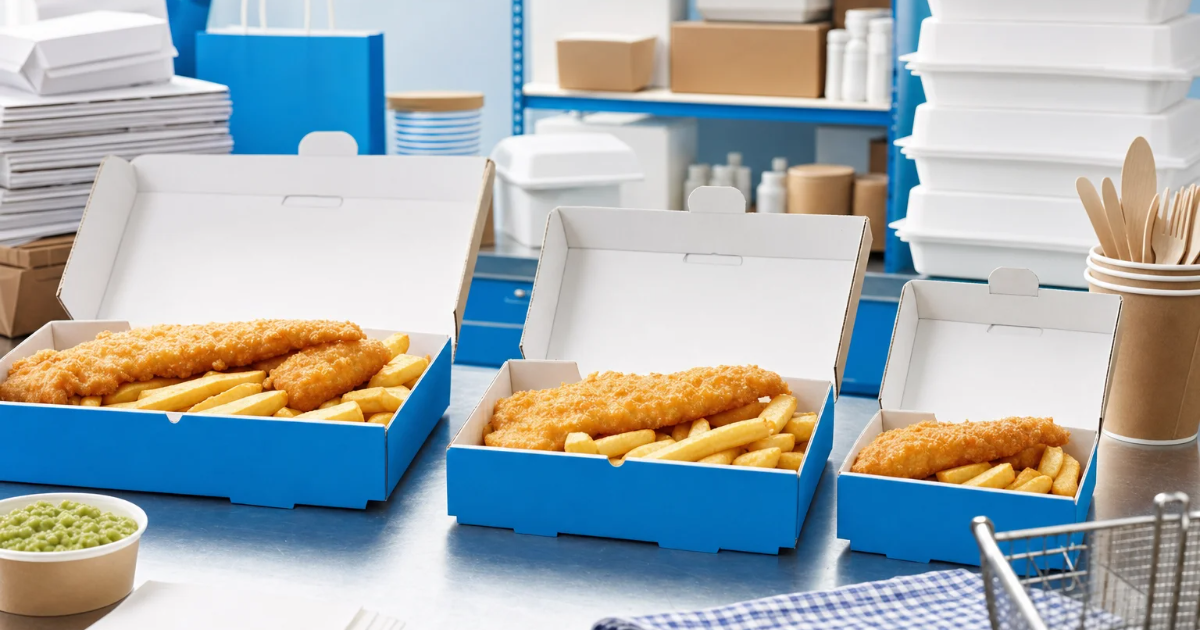
Fish and Chip Box Size Guide for Takeaway Portions
A fish and chip box size guide is a practical sizing method. It matches portion weight, fish length, chip volume, sides, sauces and service style with the right takeaway box.
Choosing the wrong box can damage a simple order during a short hold or delivery run. A tight lid can crush batter. Additionally, an oversized box lets chips slide during delivery. For busy chip shops, packaging for fish and chips takeaway must protect food, control grease and still fit in bags.
This article shows how to shortlist small, regular and large fish and chips boxes before buying wholesale. You will also see how sides, sauces, open trays, materials, printed options and bulk ordering checks affect the final choice.
How Should You Use This Box Size Guide for Fish and Chip Orders?
A fish and chip box size guide works best when you treat packaging as part of portion control, not just as a container. Start with your real menu. Then match each meal to the smallest box that protects food without bending the lid.
Many takeaway teams test packaging only after stock arrives. However, a simple 5-meal packing test can show issues fast. For example, a regular cod and chips may look fine on the counter. Yet the same meal can press against the lid with a lemon wedge and sauce pot.
Good to know: Leave a small air gap above battered fish, because trapped steam can soften crisp coatings quickly. A gap of about 10-15 mm is a practical starting point for a short collection order.
Use the fish and chip box size guide again when you compare wholesale cases, not only when you test samples. Wholesale fish and chips boxes also need to suit your order flow. A shop serving 150 evening orders needs fast packing, clear size separation and stackable cases. Therefore, box choice affects kitchen speed as much as food presentation.
Measure the food, not just the box
Use three simple checks before you compare box sizes. First, measure the longest fish portion after frying, because batter adds width and uneven edges. Next, scoop your normal chip portion into a test box rather than estimating from raw potato weight.
Finally, add the extras your team actually packs. Curry sauce, mushy peas, tartare sauce, lemon, forks and napkins all change the space you need. Small gaps become real problems when a driver stacks 4 or 5 orders in one carry bag.
Box Size Guide Table for Fish and Chip Portions
Portion-to-box guide for common fish and chip takeaway orders
|
Portion type
|
Typical contents
|
Recommended box size
|
Best for
|
What to test before bulk buying
|
|
Small meal
|
Small fish, half chips
|
Approx. 7 x 5 x 2 in
|
Kids meals, light lunches
|
Lid clearance, chip movement
|
|
Regular meal
|
Standard fish, regular chips
|
Approx. 8 x 6 x 2.5 in
|
Main takeaway meals
|
Fish length, steam release
|
|
Large meal
|
Large fish, large chips
|
Approx. 9 x 6 x 3 in
|
Big portions, delivery
|
Corner strength, stacking
|
|
Meal deal
|
Fish, chips, side, sauce
|
Approx. 9 x 7 x 3 in
|
Bundles and offers
|
Side placement, bag fit
|
|
Open tray service
|
Chips, sausage, gravy
|
Open tray or shallow carton
|
Fast counter service
|
Grease hold, carry angle
|
|
Family order
|
Multiple fish, shared chips
|
Large box plus separate chips
|
Group meals
|
Weight load, heat loss
|
Fish and Chip Portions: Which Box Size Guide Points Matter?
Small fish and chips usually need a compact box. Regular portions need a mid-size closed box. Large meals need extra depth as well as length. The right size holds the meal without forcing the lid against the fish.

A small portion often includes a shorter fish fillet and a lighter chip scoop. In practice, a compact kraft or cardboard box helps stop the meal looking lost. The box should still close without bending the fish at the edges.
Regular portions create the most packaging demand because they often represent the default menu item. Many chip shops use mid-size kraft boxes for fish and chips. These boxes balance space, grease control and bag fit. Additionally, if your regular fish varies by supplier, test the longest fillet rather than the average piece.
Large portions need more depth, not only more footprint. Chips create height, and battered fish loses quality when the lid rubs the top. For wholesale planning, treat large boxes as delivery-risk packaging. Heavy meals face more tilt and pressure.
Portion examples that make sizing easier
A simple small order might include one small fish, a half scoop of chips and no side. A regular order might include one standard fish, a full scoop of chips and one sauce pot in the bag. A large order may include larger fish, extra chips and a fork or napkin inside the carry bag.
Use a 3-box sample test for each meal size. Pack one order for counter collection, one for a 15-minute hold, and one in a stacked delivery bag. After that, check batter, chips, grease marks and lid shape.
Rule of thumb: choose the smallest box that leaves about a finger-width of headroom above the highest part of the meal.
How Do Fish, Chips, Sides and Sauces Change the Box Choice?
Sides and sauces affect box choice because they add weight, moisture and movement. A meal deal needs more planning than fish and chips alone, especially when hot sauce sits next to crisp batter.
Chips release steam and oil, so they need a box with enough base area to spread out. When chips pile too high, the lid traps more moisture. As a result, large chip scoops often perform better in a wider box than in a deeper narrow box.
Sauces should usually travel in separate pots, not loose inside the main food box. Curry sauce, mushy peas and tartare sauce can leak into chips if the lid is knocked. For these add-ons, use separate portion pots for sauces and test how they sit in the carry bag.
A good fish and chip box protects texture first, then presentation. If the batter arrives soft or crushed, the box has failed its main job.
Meal deals also change bag space. A regular box plus 2 sauce pots, 1 drink and cutlery needs a stronger carry solution than a single boxed meal. Paper handle bags often suit boxed food because the flat base supports neat loading. Additionally, choose flat-bottom kraft handle bags when several items need to stand upright.
Worked packing scenario for a Friday service
Example: a Friday tea-time prep list with 90 meals could need 20 small boxes + 50 regular boxes + 20 large boxes = 90 main boxes, plus 70 sauce pots and 90 carry bags. Add one spare case size if your menu includes seasonal specials or jumbo fish.
This worked count helps buyers avoid a common stock problem. If 55% of meals use regular boxes, a team can run out of the middle size while small and large boxes remain on the shelf. Therefore, your case split should follow sales mix, not equal quantities.
Watch out: Do not place loose vinegar-heavy salads or wet sides in the same compartment as chips. Acid and moisture can weaken cardboard and mark the base during delivery.
When Is a Tray Better Than a Closed Box?
An open tray is better when the food will be eaten quickly, served at a counter, or covered with gravy or sauce on site. A closed box is better for delivery, stacked orders and meals that need cleaner handling.
Open trays suit chip portions, battered sausage, nuggets, curry chips and quick lunch orders. Staff can load them fast, and customers can eat from them without reopening a lid. However, open trays give less protection in rain, crowded queues and delivery bags.
Closed fish and chips boxes work better for collection and transport because they protect food from contact. They also stack more neatly in holding areas. For hot fried foods, a grease-resistant food-safe base matters. Oil can travel into corners within minutes.
Foil containers can suit some hot foods with sauces, but they are not always ideal for crisp battered fish. Foil holds heat well. Meanwhile, closed cardboard and kraft food boxes may manage steam differently when ventilation is suitable. Compare foil containers for hot food against paper boxes using your own menu.
Open tray or closed box decision points
Use an open tray for food eaten within a few minutes, especially when the customer stays nearby. Choose a closed box for longer carry times, group orders and delivery. If your shop does both, keep trays and boxes in separate, clear shelf locations.
Some operators use a hybrid approach. Chips may go into an open tray, while fish travels in a closed box to reduce crushing. This setup can improve texture, but it uses more packaging and takes more packing space.
Which Materials Work Best in a Box Size Guide for Fish and Chip Shops?
Kraft, cardboard, corrugated and compostable materials each handle heat, grease and presentation differently. The best choice depends on hold time, food weight, local disposal habits and how much branding your takeaway needs.

Kraft boxes for fish and chips give a natural look and suit many hot takeaway meals. Plain kraft packaging also works well for chip shops that want practical stock without long print decisions. For broader menu lines, kraft takeaway box options can cover fish, sides and mixed hot foods.
Cardboard boxes can offer clean presentation and a wide range of formats. Corrugated options add strength, which helps heavier portions and stacked delivery orders. Printed fish and chip takeaway boxes can support brand recall. However, custom printing often needs longer lead times and minimum order planning.
Compostable boxes for fish and chips can suit buyers with a clear disposal route. Compostable packaging needs the right waste stream to deliver its benefit. Recyclable cardboard depends on grease levels and local collection rules. For plant-based alternatives, compare bagasse food containers with kraft boxes using hot chips and oily fish.
Material checks before choosing a case
Food-contact safety starts with buying packaging sold for direct food use. Ask whether the box is suitable for hot, greasy food. Also check whether any lining or print sits safely away from the food contact surface. Avoid using general storage boxes for cooked meals.
Grease resistance also needs a practical test. Place a hot fish and chips meal in the box for 20 minutes, then check the base, corners and outside surface. If oil marks pass through quickly, that size or material may not suit delivery.
Ventilation matters as much as lining. Small vents or a lid shape that allows steam to escape can help protect batter. Too much venting, however, can cool chips fast during winter collections.
How Should You Test Fit, Stacking and Delivery Bag Space for Box Size Guide Decisions on Fish and Chip Orders?
Test fish and chips boxes with real cooked food, real staff handling and real carry bags before placing a bulk order. A box that looks right empty can fail when hot food, sauces and stacked orders add pressure.
Use exactly one short test process before committing to wholesale quantities. The test should cover fit, freshness, grease resistance, strength and packing speed. Keep notes simple, because staff need to repeat the same check during busy service.
-
Pack your smallest, regular and largest meals in sample boxes during a normal service period.
-
Close each lid and check for fish contact, chip crushing and bent corners.
-
Hold one packed meal for 15 minutes, then check batter texture and chip steam.
-
Stack 3 loaded boxes in a carry bag and inspect lid pressure and base sag.
-
Add sauce pots, napkins and cutlery, then confirm the full order still sits flat.
-
Record the box size that protects each menu item with the least wasted space.
Tip: Run the test with hot food, not cold samples. Cold chips do not release the same steam or oil, so they give a false result.
Bulk pricing and quantity breaks matter after the size test, not before it. Cheaper cases can cost more if orders need repacking or an extra bag. If you need fish and chips boxes wholesale Leeds supply, local access can also reduce the risk of running short between orders.
Check shipping transparency before checkout
Before placing a wholesale order, check the shipping or collection terms as carefully as the box size. Look for clear delivery charges, minimum order values, available collection options, cut-off times and any postcode limits before you rely on the stock for service.
Shipping transparency also helps you compare the real cost of a case. A lower unit price may not be the better option if delivery charges, split shipments or unclear lead times make the order harder to plan. For regular takeaway supplies, choose a buying route that shows stock, basket totals and delivery or collection details before payment.
Lead time, minimum order and printed packaging questions
Plain boxes usually give buyers the most flexible stock position because they fit changing menus. Printed boxes help brand presentation, especially for shops with delivery and repeat local trade. However, custom printing and branding can involve artwork checks, production slots and larger case commitments.
Ask 4 clear questions before choosing printed packaging. What is the minimum order quantity? What is the artwork approval process? How long is the turnaround after approval? Can plain stock cover the same size during a reprint?
A practical chip shop often keeps one printed regular box and one plain backup size. This avoids stopping service if branded stock runs low. It also keeps packaging simple for staff who pack fast under pressure.
Practical Box Size Guide Recommendations for Fish and Chip Wholesale Orders
Wholesale fish and chips boxes should be chosen by menu role, not by guesswork. Build a core range around 3 main sizes, then add trays, sauce pots and bags only where the order style needs them.
For most chip shops, the regular box deserves the most testing because it carries the highest share of meals. Small boxes work best for kids meals, lunch offers and light portions. Large boxes should handle the longest fish, the heaviest chip scoop and delivery stacking without lid collapse.
If you sell meal deals, avoid forcing everything into one box. Separate sauce pots protect texture, while carry bags hold the full order together. Add takeaway napkins where sauce, vinegar or handheld eating creates mess.
For Leeds buyers, local wholesale access can make testing easier because staff can compare sizes before committing to repeat orders. Clear product categories, search and basket ordering also help teams reorder the same packaging during the week. Fish and chips boxes Leeds buyers should check stock by size, material and case format before changing a working pack setup.
Where another buying route may make sense
A large custom packaging producer may suit a national chain that needs many printed sizes across several sites. A small shop testing a new menu item may also buy a tiny one-off pack from a general marketplace. Those routes can make sense for special cases.
For day-to-day trade ordering, a local wholesale cash and carry setup offers a different strength. Buyers can group boxes, bags, napkins, cutlery and cleaning products into one replenishment routine. That matters when packaging stock supports service every day, not just one design project.
In our experience, the best box is rarely the biggest one on the shelf. We would rather test a regular meal with sides, sauce and a carry bag, then size up only where the food proves it needs more room. That keeps presentation tidy and waste under control, the team at a local wholesale cash and carry.
FAQ
These quick answers cover the main sizing, material and ordering checks for takeaway teams.
What box size is suitable for small, regular and large fish and chips?
A small meal often suits an approximate 7 x 5 x 2 inch box, while a regular fish and chips meal often needs about 8 x 6 x 2.5 inches. A large fish or extra chip portion may need about 9 x 6 x 3 inches. Always test with cooked food.
How do sides, sauces and meal deals affect packaging choice?
Sides and sauces add moisture, weight and movement to the order. Sauce pots should usually sit outside the main fish box, especially for curry sauce, mushy peas and tartare sauce. Meal deals may need a larger carry bag rather than a much larger food box.
When should a takeaway use an open tray instead of a closed box?
A takeaway should use an open tray for quick counter service, chips with gravy, battered sausage or food eaten within a few minutes. Closed boxes work better for delivery, collection, stacking and cleaner handling. The service style should decide the pack format.
What should be tested before buying boxes in bulk?
Test fit, lid clearance, grease resistance, steam release, stacking strength and carry bag space before buying boxes in bulk. Use hot cooked food, not cold samples. Also test the full order with sauce pots, napkins, forks and drinks where those items appear on the menu.
Are compostable boxes for fish and chips always better than recyclable boxes?
Compostable boxes are not automatically better in every setting. Compostable packaging needs a suitable disposal route, while recyclable cardboard can be affected by grease contamination. Choose the material that matches your food, your customers and the waste options available after service.
Conclusion: Use the Fish and Chip Box Size Guide as a Buying Test
The fish and chip box size guide gives takeaway teams a clear way to buy packaging by portion, not guesswork. Start with small, regular and large meals, then add the real sides, sauces and bags that leave the counter with each order.
Material choice also matters. Kraft, cardboard, corrugated, compostable and foil formats all behave differently with hot fried food. The strongest result comes from testing food freshness, heat retention, grease resistance and stacking before committing to wholesale cases.
When you are ready to compare practical wholesale options, start with plain kraft fish and chip boxes and match the size to your real menu. Add sample checks for sauces, bags and service style before placing a repeat order.