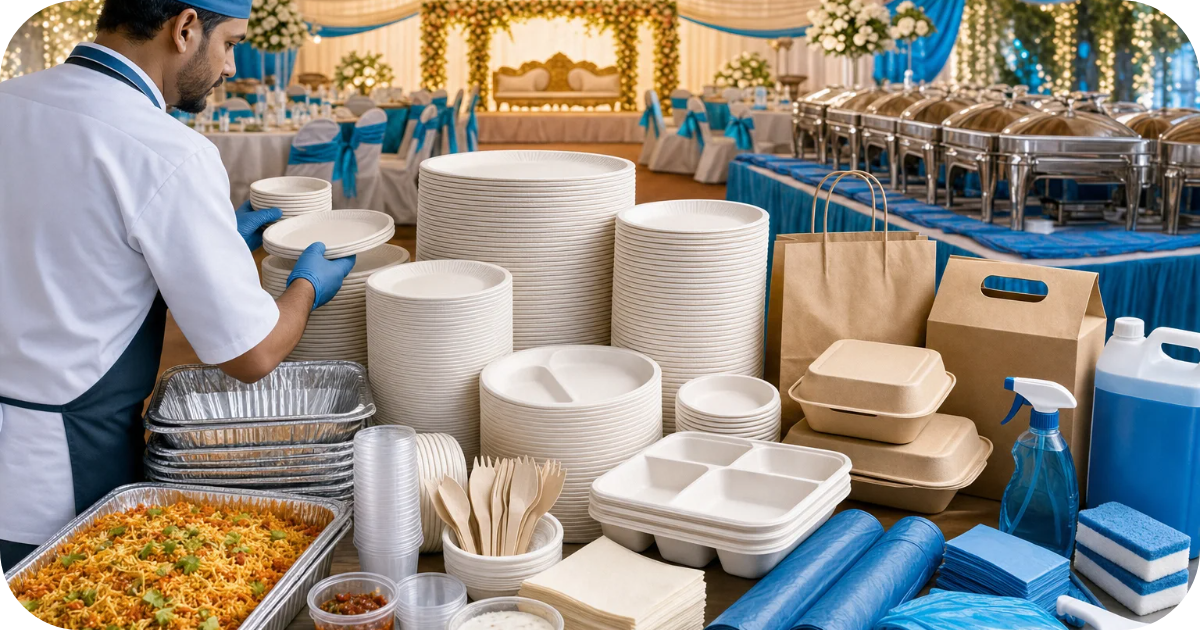
Indian Wedding Catering Supplies Checklist for Caterers
Indian wedding catering supplies are the disposable tableware, serving items, takeaway packaging, hygiene products and cleaning essentials that help teams feed guests and control service on the wedding day.
A busy Indian wedding can move from welcome snacks to a main meal, sweets, tea service and leftovers in one service window. A 300-guest event can easily involve more than 1,000 single-use items. For example, that count includes plates, bowls, napkins, cups and takeaway containers. Because service peaks fast, one missing item can slow a whole buffet line.
Food businesses, caterers, bakeries and event buyers need a practical plan before the first tray leaves the kitchen. This article explains what to buy. It also shows how to group supplies by event stage. Additionally, it covers packaging for curries, rice, sweets, chutneys and clean-up. Local wholesale access in Leeds can support trade buyers who need dependable stock and clear product categories.
Checklist: supplies for Indian wedding catering by event stage
Indian wedding catering supply groups organised by setup, service and clean-up stage
|
Event Stage
|
Supply Category
|
Items to Prepare
|
Why It Matters
|
|
Setup
|
Guest tableware
|
Plates, thalis, bowls, cutlery, napkins
|
Fast place setting
|
|
Setup
|
Serving station stock
|
Platters, food trays, tongs, ladles
|
Controlled buffet flow
|
|
Setup
|
Drink service
|
Cups, stirrers, lids, bins
|
Tea and soft drinks
|
|
Service
|
Hot meal packaging
|
Foil trays, lidded bowls, carry bags
|
Heat and spill control
|
|
Service
|
Condiments
|
Portion pots, deli containers, labels
|
Chutney portioning
|
|
Service
|
Sweet boxes
|
Bakery boxes, trays, liners, bags
|
Gift and takeaway use
|
|
Clean-up
|
Janitorial supplies
|
Cloths, gloves, chemicals, refuse sacks
|
Safer close-down
|
|
Clean-up
|
Waste sorting
|
Bin liners, food waste bags, wipe rolls
|
Quicker venue handover
|
Indian wedding catering supplies work best when buyers group them by job: setup, live service and post-event clear-down. Moreover, this split prevents a common mistake. Buyers may order guest-facing items but forget stock for packing leftovers and cleaning serving areas. For example, a 400-guest wedding may need 400 main plates, 400 dessert bowls and 800 napkins. Add a 10% spare allowance before you count staff use.
Additionally, setup stock should arrive packed by zone, not mixed in one large pile. Tableware belongs near the dining area. Meanwhile, foil containers and portion pots belong behind the serving or kitchen pass. As a result, staff can restock without crossing guest routes during the busiest 30 minutes of the meal.
Rule of thumb: plan guest-facing disposable items at 100% of the guest count plus 10% spare, then add separate stock for staff meals, tasting portions and takeaway packing.
Which tableware and serving items do Indian wedding caterers need?
Indian wedding caterers need plates or thalis, bowls, cutlery, napkins, cups, serving trays, platters and utensils. These items must suit wet curries, rice dishes, breads, sweets and tea service. The best mix depends on the menu format. Buffet service, plated service and street-food stations each place different pressure on stock. A mixed menu with 6 dishes needs more compartment control than a simple two-course meal.

Core tableware supplies for Indian wedding catering
Thalis help portion several dishes on one base. Therefore, they can speed service for rice, dal, sabzi, chaat and breads. Caterers serving Asian menus often use disposable thalis for Asian catering because compartments help keep sauces separate. If a wedding serves 350 guests and offers 5 menu components, compartment trays can reduce the need for separate bowls.
Likewise, plates still matter where the meal includes starters, desserts or buffet return visits. A practical allowance is 1 main plate, 1 side or dessert plate and 2 napkins per guest, plus 10% spare. Therefore, a 250-guest event needs about 275 main plates, 275 smaller plates and 550 napkins. Count staff and children’s portions separately.
Bowls, cutlery and napkins for formal service
Bowls should match the food texture. Deep bowls suit dal, chana, kheer and raita. In contrast, shallow serving bowls suit salads and dry snacks. For curries, rice dishes or sides, bagasse catering bowls offer a plant-fibre option that fits many event settings.
Similarly, cutlery choices affect the guest experience. Heavy-duty cutlery gives a smarter feel for formal tables. Lighter disposable cutlery can suit staff meals, children’s meals or back-of-house use. In practice, many caterers hold 1 fork, 1 spoon and 1 spare spoon per guest. This works well when rice, curry and dessert all appear on the same service plan.
Napkins are easy to undercount. A wedding with starters, mains and sweets can use 2 to 3 napkins per guest across the event. In addition, keep a separate pack at the drinks station. Tea spillages and condensation build up quickly on busy tables.
The right catering supply plan follows the menu, not the other way round. Wet dishes, sweets and fast buffet lines all need different stock.
Serving supplies for Indian wedding catering buffet meals
Furthermore, serving stations need more than guest plates. Each hot dish needs a serving spoon or ladle. Each bread or snack tray needs tongs. For 8 buffet dishes, plan at least 8 serving utensils in use and 2 to 4 backups. Utensils get dropped, moved or taken to the wrong station.
Platters suit naan, pakoras, samosas and mithai displays. Food trays support chaat, rice boxes or street-food portions. Kraft trays work well where guests collect snacks while standing. The tray walls help contain sauces and toppings. If the menu includes live stations, give each station its own stack of trays, napkins and portion pots.
Tip: keep backup serving utensils in a labelled crate behind the buffet, not in the kitchen. A 30-second replacement avoids a visible queue at peak service.
How many supplies should you buy for guest numbers and menu type?
Caterers should calculate Indian wedding catering supplies from guest count, course count, service style and takeaway plans. A plated meal needs tighter counts. However, buffet service needs more spares because guests may return with fresh plates. A realistic plan separates dining stock from packing stock. Leftover containers should never depend on unused guest plates.
Use a quantity method before ordering
A simple method starts with the confirmed guest count and then applies item multipliers. Use 1 main eating item per guest for the main meal. Add 1 smaller item for sweets or starters, 2 napkins per guest and 10% spare on all guest-facing disposables. For drinks, plan 1 to 2 cups per guest if tea, water and soft drinks run at different times.
Menu type changes the numbers. A thali service may need fewer loose bowls. Conversely, a buffet with separate raita, dessert and chaat can need 2 to 3 bowls per guest. Meanwhile, canapé or snack service can add 1 tray or small plate per guest before the main meal starts.
A worked quantity example for a 300-guest wedding
Example: for 300 guests with one main meal, one sweet course and takeaway leftovers, plan 330 main plates, 330 dessert bowls, 660 napkins, 360 cutlery sets, 120 foil containers and 150 portion pots. This gives a total of 1,950 prepared units or sets.
The example uses a 10% spare allowance on main dining items. It also adds a larger cutlery allowance for dropped or misplaced pieces. Separate takeaway stock matters because some guests will ask for sweets, curries or rice to take home. For a longer event with welcome snacks, add another 330 small plates or trays to the same plan.
Stock should also reflect the event timetable. If starters begin at 4pm and mains start at 7pm, staff need two restock points rather than one large setup. That split prevents early snack service from using items needed for the main meal.
Watch out: buffet events often use more plates than guest numbers suggest. A 10% spare allowance may be tight if guests make 2 trips to different stations.
What packaging is useful for leftovers, sweets and takeaway portions?
Leftover and takeaway packaging for Indian weddings should cover hot curries, rice, breads, sweets, chutneys and mixed portions. Strong lids, heat tolerance and leak control matter. Sauced food often moves from serving trays to cars, hotel rooms and family homes. A good packing station needs containers, portion pots, bags, labels and wipes in one place.

Packaging supplies for Indian wedding catering portions
For instance, foil containers suit hot food because they hold heat well and stack neatly for transport. Caterers packing biryani, dal, sabzi or mixed leftovers often choose foil containers with fitted lids for end-of-night takeaway portions. Use shallow sizes for rice and dry dishes. Then keep deeper sizes for saucy curries.
Portion pots handle chutneys, pickles, raita, sauces and small desserts. If a wedding offers 3 chutneys and expects 200 takeaway requests, the packing area can use up to 600 small pots. Clear pots also help staff identify mint chutney, tamarind sauce and yoghurt-based dips without opening lids.
For condiments and dips, portion pots and deli containers keep small items controlled. They also reduce waste because staff can pre-portion popular sauces during quieter periods. As a result, the main queue moves faster once guests begin asking for food to take home.
Sweet boxes, bakery packaging and gift portions
Indian weddings often include mithai, cake, biscuits or boxed sweets for guests. Bakery packaging should protect the finish. This matters where sweets carry syrup, nuts or delicate decoration. A 250-guest event that gives 1 sweet box to each household may need fewer boxes than guests. Nevertheless, it still needs spare bags and liners for last-minute family requests.
Small trays and boxes also help with post-event distribution. Families may want separate packs for close relatives, suppliers or hotel rooms. Therefore, keep a small range of sizes rather than one container type for every item.
Carry bags complete the takeaway setup. Strong bags matter because two curry containers, rice and sweets can weigh more than a single snack order. Place bags at the end of the packing table. Filled containers can then move in one direction and avoid crossing with empty stock.
Which cleaning and janitorial supplies should be ready during service?
Cleaning supplies for Indian wedding catering service should include food-safe cleaning chemicals, cloths, gloves, blue roll or wipe rolls, refuse sacks, bin liners, hand towels and spill control items. These supplies need to stay ready during service, not only at the end. Buffet spills and drink areas can become unsafe within minutes. A clear cleaning kit also helps venues hand back spaces faster.

Live-service hygiene supplies for Indian wedding catering
During service, staff need cleaning stock near the buffet, drinks area and kitchen pass. Place cloths, spray, gloves and wipes in at least 3 zones: food service, drinks service and back-of-house. This layout means a tea spill or curry splash can be cleaned without staff leaving their station.
Food service teams should separate cleaning items by use. Cloths used around dining tables should not return to food prep areas. Colour-coded cloths and gloves make that split easier, especially when temporary staff join the event for only 1 shift.
Good to know: put a small spill kit within 10 metres of the buffet where possible. Curry sauces, tea and soft drinks create slip risks in high-footfall lanes.
End-of-event janitorial stock
Post-event clean-up needs refuse sacks, bin liners, gloves, cleaning chemicals and enough wipe roll for serving tables, packing benches and prep areas. A wedding with 300 guests can fill multiple refuse sacks with plates, napkins and food packaging soon after the main meal. For food service cleaning tasks, trade cleaning chemicals help buyers keep janitorial stock in the same ordering plan as catering supplies.
Waste areas need clear flows. Put food waste, recyclables and general waste points away from the guest queue. However, keep them close enough for staff to use quickly. If bins sit too far from service, staff leave used items on side tables and clean-up takes longer.
Gloves also deserve more attention than many supply lists give them. Cleaning staff, packing staff and food handlers may need different glove changes across the event. For a 6-hour service, keep extra boxes accessible rather than locked in a vehicle.
How should you group supplies for setup, service and post-event clean-up?
Indian wedding catering supplies should be grouped into physical kits that match staff tasks: table setup, buffet service, takeaway packing, drinks service and clean-up. This method saves time because each team receives the items it needs without sorting mixed boxes on site. It also helps buyers spot missing stock before leaving the cash and carry or warehouse.
How to group catering supplies for an Indian wedding?
Grouping supplies starts with the event plan. A caterer should know the number of guests, number of service points, menu sections and clean-up rules before packing stock. For example, a wedding with 2 buffet lines needs duplicate utensils, duplicate napkin stacks and duplicate plate stacks. This still applies when both lines serve the same dishes.
Use the following 6-step plan for packing and checking event supplies:
-
Split the venue plan into setup, service, takeaway, drinks and clean-up zones.
-
Assign one labelled supply crate to each zone before loading the vehicle.
-
Count guest-facing items against the guest number plus a 10% spare allowance.
-
Pack takeaway containers, portion pots and bags separately from dining stock.
-
Place cleaning chemicals, gloves and refuse sacks in a marked janitorial kit.
-
Check every crate against the menu before the stock leaves the site.
This process works because it links every item to a job. A plate is not just a plate. It belongs to the main buffet, the dessert station or the staff meal area. That level of detail reduces last-minute calls during service.
Set up a packing station for leftovers
A packing station should sit near the kitchen pass or back-of-house area, not at the main guest buffet. The table needs foil containers, portion pots, lids, labels, bags, gloves and wipes. When the station has a one-way flow, staff can fill, lid, label and bag each order. Clean and used surfaces stay separate.
For large family requests, keep a few larger containers behind the station. Guests may ask for 4 portions of curry or a tray of rice after the main service ends. If the team only has small pots left, packing takes longer and uses more lids.
Additionally, labels can reduce confusion. Even simple hand-written labels such as “veg”, “chicken”, “mild” or “contains nuts” help guests and family members sort food later. Use labels as a practical aid. They should not replace proper allergen controls agreed with the caterer and venue.
Practical recommendations for buying from a Leeds wholesale cash and carry
A Leeds wholesale cash and carry can be useful for Indian wedding catering supplies because trade buyers can combine packaging, tableware and janitorial products in one buying run. Local access can help when a guest count changes 48 hours before an event. It can also help when a supplier needs extra containers on the day. An ecommerce catalogue can help buyers search by category before they travel or place an order.
Check category depth, not just single items
Event buyers should look for a range that covers bags, bakery packaging, bowls, containers, cups, cutlery, janitorial products, napkins, plates, platters and table covers. Depth matters because Indian wedding menus use many formats in one day. A single meal can need bowls for dal, trays for chaat, plates for sweets and containers for leftovers.
An ecommerce catalogue can let buyers search, browse categories, add items to a basket and log in to order. This setup can support repeat trade buying because the same core items often appear across several events. For example, foil containers, napkins and cleaning stock may sit on every wedding checklist. Thalis or sweet boxes may change with the menu.
Compare local wholesale buying with generic buying routes
Local wholesale buying suits caterers who need trade quantities across several categories. A large marketplace platform may suit a one-off household purchase. This is especially true if the buyer only needs 1 pack of napkins or 1 small box of cups. Yet it can be harder to check event-specific categories side by side when tableware, packaging and janitorial stock come from separate sellers.
Generic buying routes for Indian wedding catering stock
|
Buying route
|
Best fit
|
Limit to consider
|
|
Local wholesale cash and carry
|
Trade event quantities
|
Stock check needed
|
|
General marketplace platform
|
Small one-off item
|
Mixed sellers
|
|
Single-category supplier
|
Special item depth
|
Less range breadth
|
|
Venue stock cupboard
|
Emergency backup
|
Limited choice
|
The right route depends on the job. If a caterer needs plates, bowls, takeaway packaging, napkins and cleaning supplies for 500 guests, a broad wholesale catalogue can save planning time. On the other hand, a buyer who needs one small decorative item may prefer a general retail option.
Availability also matters in Leeds because event teams often load vehicles the day before service. Searchable categories can reduce the time spent walking aisles or calling for basic stock checks. Basket functionality then helps the buyer build a repeatable order for the next wedding.
Conclusion: building a reliable supplies plan for Indian wedding catering
A reliable Indian wedding catering supplies plan starts with the menu, then links each item to a service stage. Tableware supports guest flow. Serving items keep buffet lines moving. Takeaway packaging protects leftovers and sweets. Meanwhile, cleaning stock keeps the venue safe during and after service. The strongest checklists treat these groups as one working system, not separate last-minute purchases.
Buyers should calculate quantities with a guest count, a spare allowance and a clear split between dining and takeaway stock. For Indian wedding catering supplies in Leeds, buyers can use Thali Outlet as a catalogue for packaging, disposable tableware and janitorial essentials. The result can be a clearer buying list and fewer gaps on the day.
In our experience, the best event supply plans feel almost boring before service starts. Every crate has one job, and every station has spare stock. We would rather over-plan napkins, lids and cleaning items than ask staff to improvise during a peak buffet rush. That practical view comes from Thali Outlet.
FAQ
These common questions help caterers check the main supply groups before ordering for a wedding.
Which disposable tableware and serving items are needed for Indian wedding catering?
Indian wedding catering usually needs main plates or thalis, bowls, cutlery, napkins, cups, serving platters, food trays, tongs and ladles. A buffet with 6 to 8 dishes also needs backup utensils and spare plate stacks. Add dessert bowls or small plates if sweets, cake or mithai are served after the main meal.
What packaging is useful for leftovers, sweets and takeaway portions?
Useful packaging includes foil containers for hot curries and rice, portion pots for chutneys and raita, bakery boxes for sweets, carry bags for guests and labels for food identification. Keep takeaway stock separate from dining stock. This prevents end-of-night packing from using plates or bowls needed during service.
Which cleaning and janitorial supplies should be ready during service?
Cleaning supplies should include food-safe cleaning chemicals, cloths, gloves, wipe rolls, refuse sacks, bin liners, hand towels and spill control items. Place cleaning stock near the buffet, drinks station and back-of-house area. Fast access matters because tea, curry sauces and soft drinks can create slips during busy service.
How should supplies be grouped for setup, service and post-event clean-up?
Group supplies by task and venue zone. Use separate crates for table setup, buffet service, takeaway packing, drinks and janitorial work. Each crate should hold the items that team needs, such as plates and napkins for setup or containers, lids and bags for takeaway packing.
How early should Indian wedding catering supplies be checked?
Check supplies once when the guest count becomes firm and again before loading for the venue. A final check 24 to 48 hours before service gives buyers time to add plates, lids, portion pots or cleaning stock. Use the menu and station plan as the count sheet.
Build your event order around the items guests will use first, then add takeaway and cleaning stock before checkout. For the core meal service, browse disposable plates for catering and match the format to your menu, guest count and service style.